From October 6-8, Vermont Folklife's Director of Education, Mary Wesley, joined fellow Folk and Traditional Arts program managers for a special gathering in Washington, DC. The meeting, part of the 2026 National Assembly of State Arts Agencies (NASAA), featured site visits and conversations about the opportunities and challenges of supporting living cultural traditions.
The gathering brought together folklorists and folk arts professionals working in state arts agencies and regional and nonprofit organizations. These colleagues share a commitment to supporting traditional artists and cultural communities through apprenticeship programs, community documentation projects, public programming, and cultural heritage initiatives. It provided a valuable opportunity to exchange ideas, strengthen connections between folk arts professionals nationwide, and learn from one another's work.
Below Mary shares about her trip to DC in five photographs:
1 - Portable tape recorder - Alive in Many Hands exhibit at the American Folklife Center
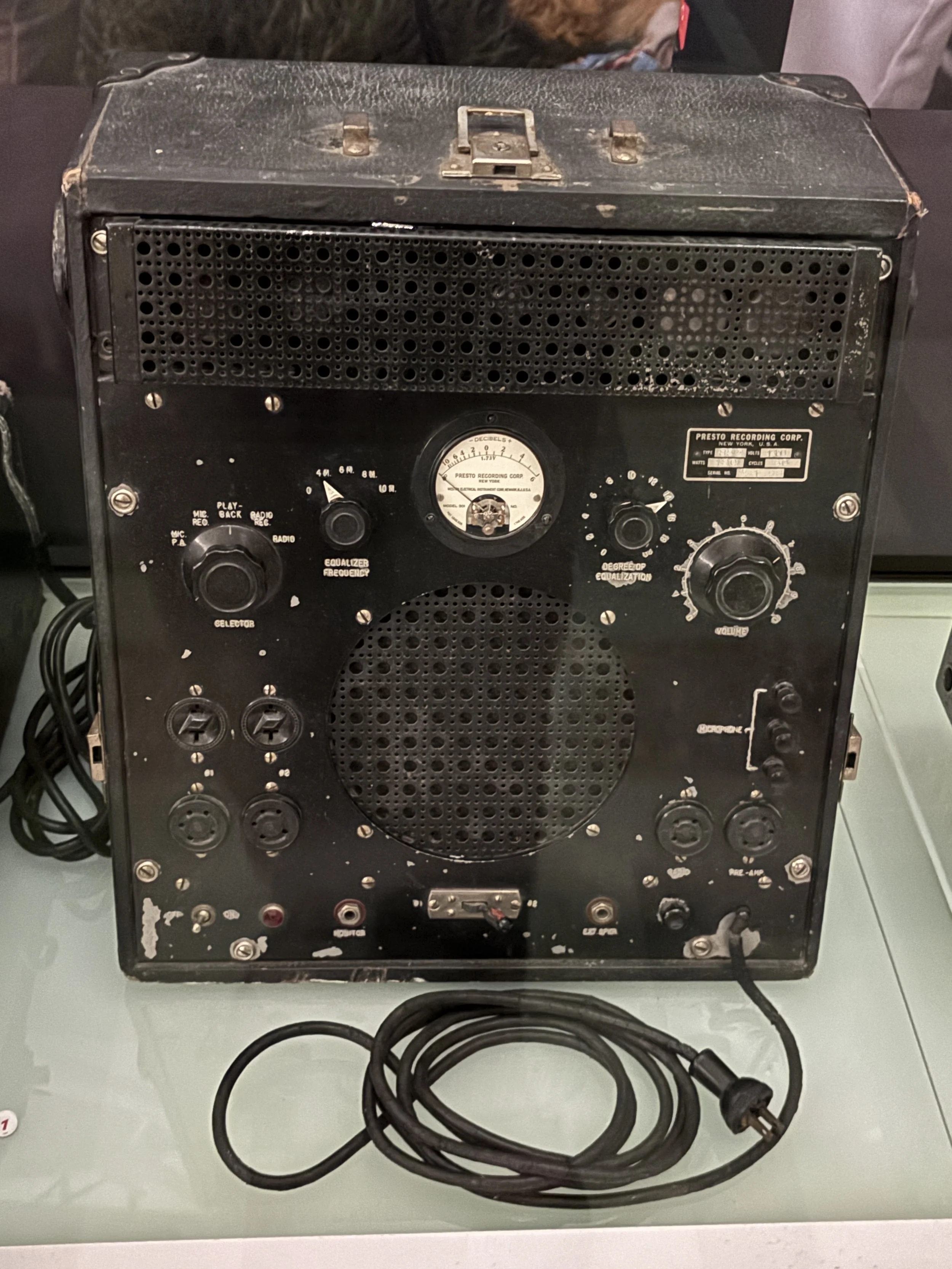
From the Alive in Many Hands exhibit at the LOC
Day one of the pre-conference included visits to two of the nation's leading folklife institutions: the Smithsonian Center for Folklife and Cultural Heritage and the American Folklife Center at the Library of Congress (AFC), two institutions that might affectionately be described as “motherships” of our field. This was my first time visiting both!
The AFC was founded 50 years ago, and the group toured their newly opened exhibit "Alive in Many Hands: The American Folklife Center at 50." The exhibit features 150 items from the AFC collections—photos, artifacts, and audio-visual recordings—which reflect how living cultural traditions like music, dance, visual art, and foodways are passed down through generations, and the way these practices shape our national identity. A few examples: photos documenting the creation of the AIDS memorial quilt, wax cylinder recordings from 1890 of a Passamaquoddy song, a banjo signed by Woody Guthrie and Pete Seeger, and even a “scent station,” where you could smell five distinct aromas connected to food traditions across the United States (one was easy for this Vermonter to guess: maple syrup!).
Many colleagues in our group pointed out photographs and items that had come to the LOC’s collections through fieldwork projects conducted in their own states. It was also inspiring to see the history of documentation practices reflected in the exhibit, including the “portable” reel-to-reel audio recorder pictured above. Though the tools of the trade have changed, I loved the reminder of the generations of effort that have gone into documenting and preserving living cultural traditions.
2 - Folk arts professionals at the Smithsonian Anacostia Community Museum
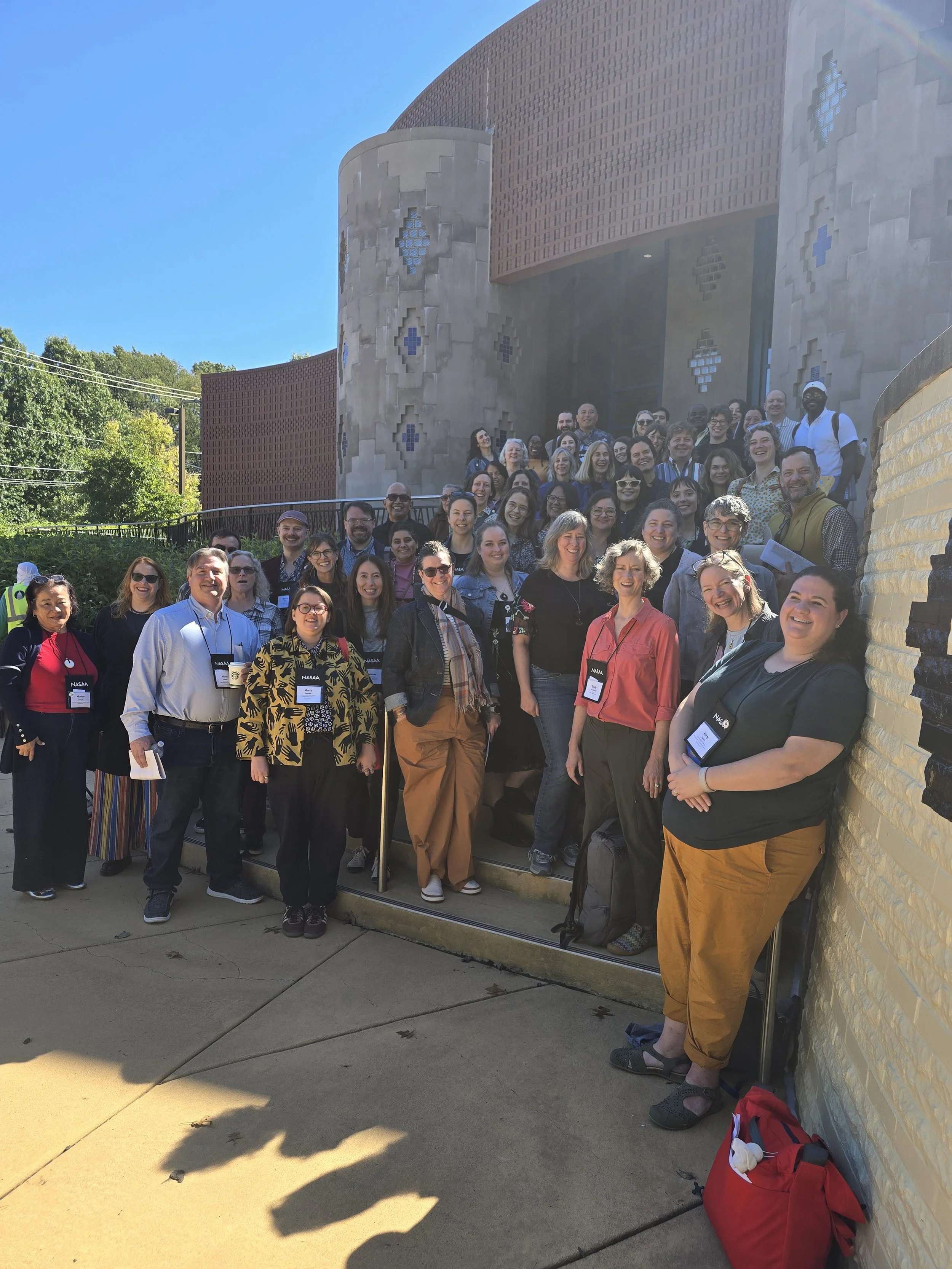
Photo by Sally Van de Water
On day 2 our group visited the Smithsonian Anacostia Community Museum, an institution with a remarkable history of community-centered documentation and history keeping. Founded in 1967 as the Anacostia Neighborhood Museum, it was an early pioneer of an approach that has become central to the field of public folklore: working with communities to document and interpret their own histories, experiences, and cultural traditions. This is the spirit of Vermont Folklife’s own Community Fellows Program.
I especially loved our tour of the current exhibition, We Make History, which both highlights items in the museum’s archival collections and invites people to notice and recognize the many ways everyone can contribute to shaping our understanding of place and history such as snapping photos of everyday life, keeping diaries, and documenting family stories.
3 - Panel on DC's Go-Go Tradition
Later in the day we gathered at Busboys and Poets, a community gathering space and restaurant in Anacostia to hear a panel discussion focused on community documentation through the lens of Go-Go, a social music tradition indigenous to DC and deeply rooted in the region’s Black communities. In 2020 DC Mayor Murial Bowser signed a law designating Go-Go music as the official music of the District of Columbia!
This amazing presentation was facilitated by Dr. Natalie Hopkinson—associate professor of media, democracy, and society at American University, and chief curator of Anacostia’s Go-Go Museum and Café, which opened in 2024 and was just a block away from our meeting.
The panel brought together filmmakers, performers, and culture workers each with a different perspective on documenting and sustaining DC’s Go-Go music tradition:
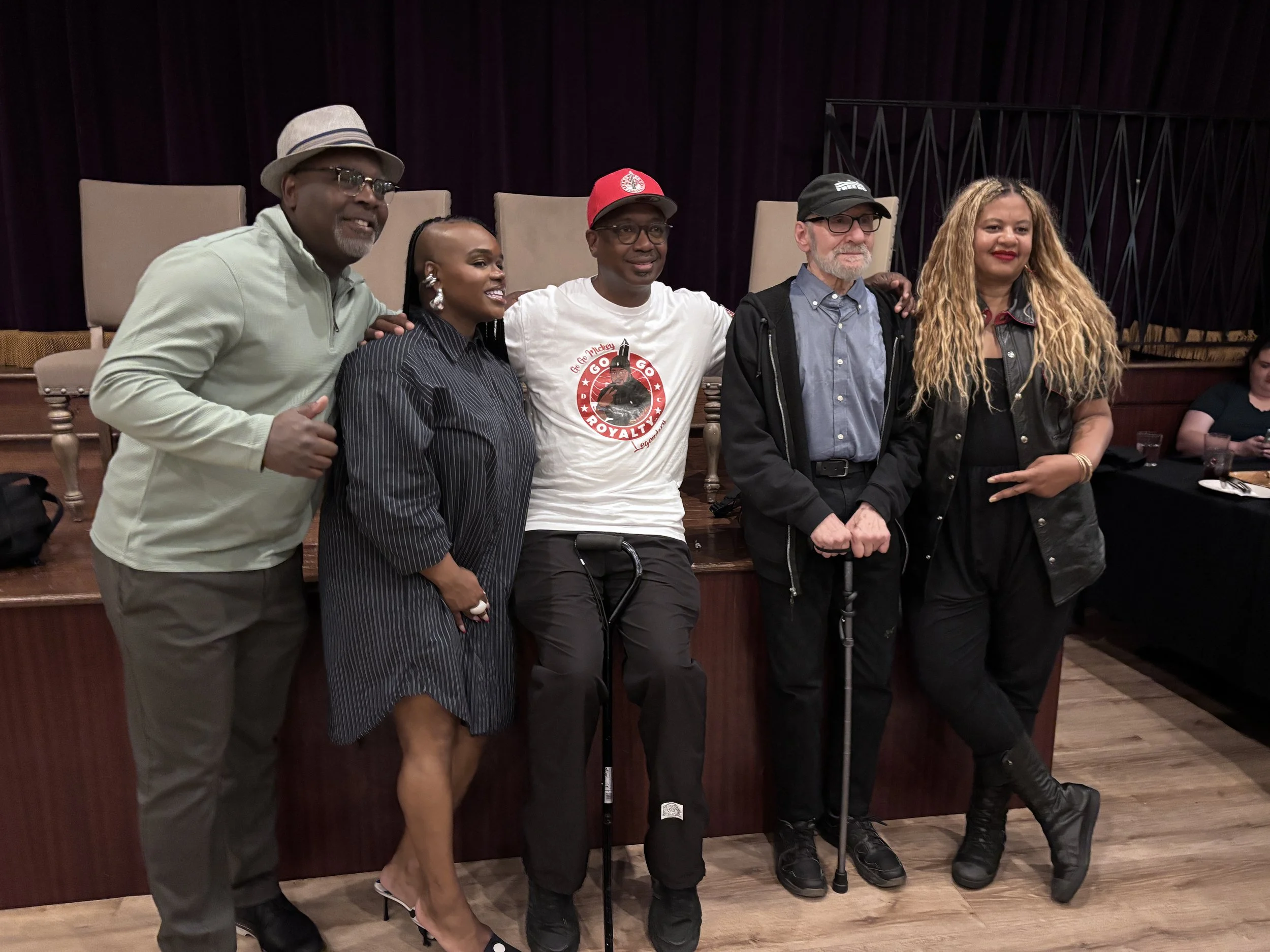
L-R: “Uncle Devin” Walker, Nyjia Jones, Nico Hobson, Michael Licht, Natalie Hopkinson
“Uncle Devin” Walker is a celebrated children's music educator who incorporates the Go-Go sound and history into his educational programming as a way to connect younger generations to the tradition
Nyjia Jones is a local filmmaker who has created a documentary film—Listen to My Heartbeat—exploring the history and cultural significance of Go-Go music, and the threats that gentrification, displacement, and cultural erasure pose to the communities who created and are still actively sustaining the tradition.
Nico Hobson is the CEO and Founder of GoWin Media LLC, with the goal of bringing “Go-Go music to the masses.” He’s also the owner of the streaming site Go-Go Radio Live and creator of the Nico Hobson Go-Go Collection housed at The People's Archive in D.C. 's Martin Luther King, Jr. Memorial Library. Nico’s collections include many "live tapes" or PA tapes. These bootleg cassettes and LPs recorded straight from the soundboard at Go-Go shows were one of the primary means of disseminating Go-Go music before the advent of digital technology.
Michael Licht served as the first folklorist for the D.C. Commission on the Arts and Humanities beginning in 1987. He continued to serve the city as a staff folklorist and arts liaison into the 1990s. Mike played an important role in documenting Go-Go music and building public understanding and recognition for its cultural and musical significance.
I was so impressed with how this presentation illuminated the many ways living traditions can be sustained—from institutional support and academic research to public education and awareness, and above all, community-led efforts.
4 - Join Session with Arts Educators
On the final day of the pre-conferences our group of Folk and Traditional Arts Program Managers joined the Arts Education Managers’ peer group for a special collaborative session at “Artechouse,” the nation's first permanent exhibition space dedicated to immersive, technology-driven digital and experiential art.
(Here I’ll pause to say how excited I was about the photo-opportunity presented by this site visit. For months leading up to my trip to Washington, jokes had been flying around the Vermont Folklife office about Mary’s upcoming space travels, thanks to the homonym offered by “NASAA” and “NASA.” Low and behold…we actually did get to visit the horsehead nebula…)
The out-of-this-world setting was a perfect place to meet with arts educators from around the country to explore how traditional arts practices might offer valuable models for teaching and learning, and how closer collaboration between our fields might strengthen programs and partnerships.
A highlight of our meeting was a presentation by members of the National Hand Dance Association. “Hand Dance” is D.C’s official dance (designated in 1999.) Experiencing a demo of this living social dance tradition, and getting on the galactic dance floor to try it ourselves, served as a great icebreaker for our meeting. It illustrated perfectly how participatory, traditional art forms can offer a gateway for learning about community history and cultural knowledge.
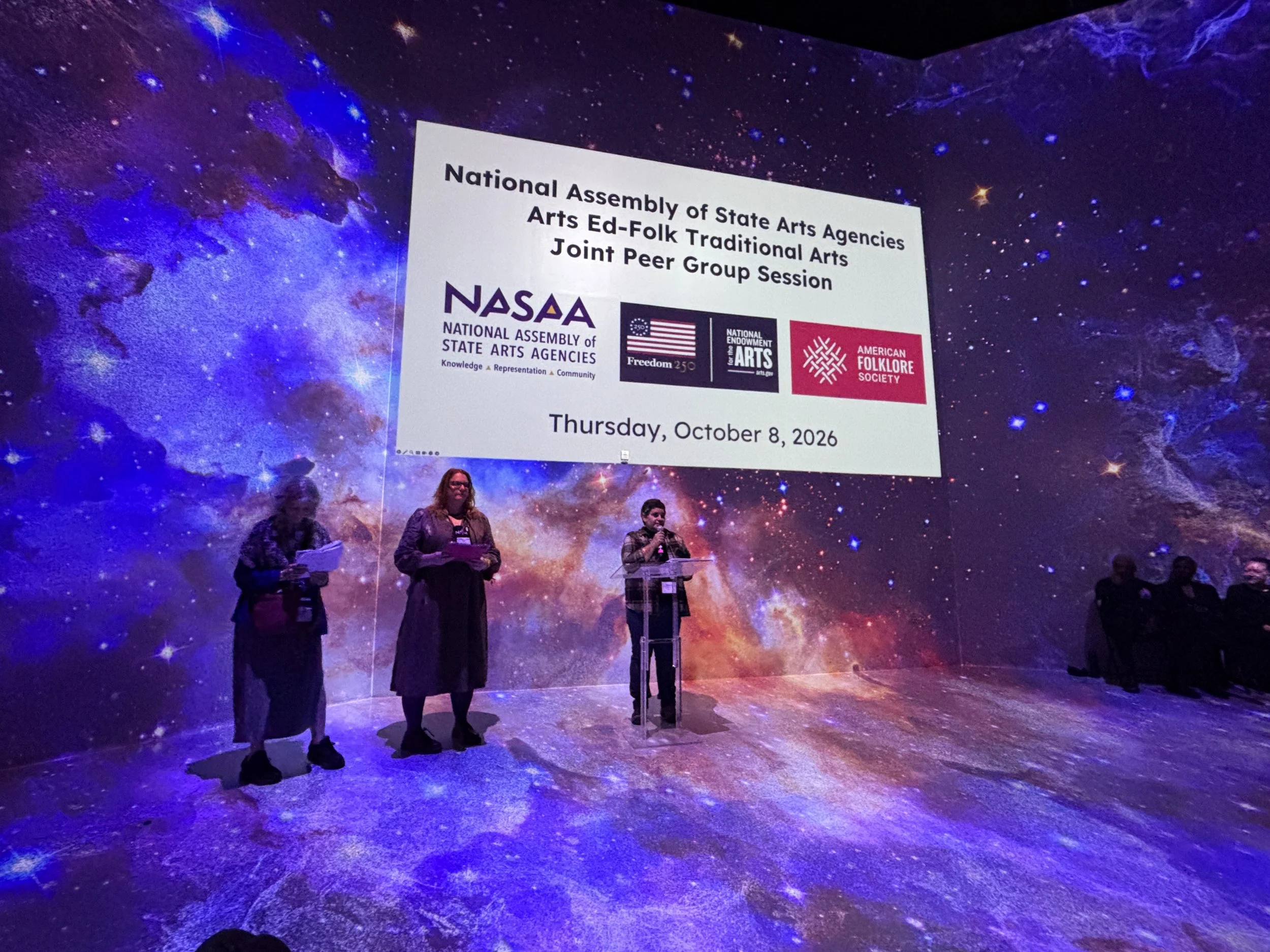
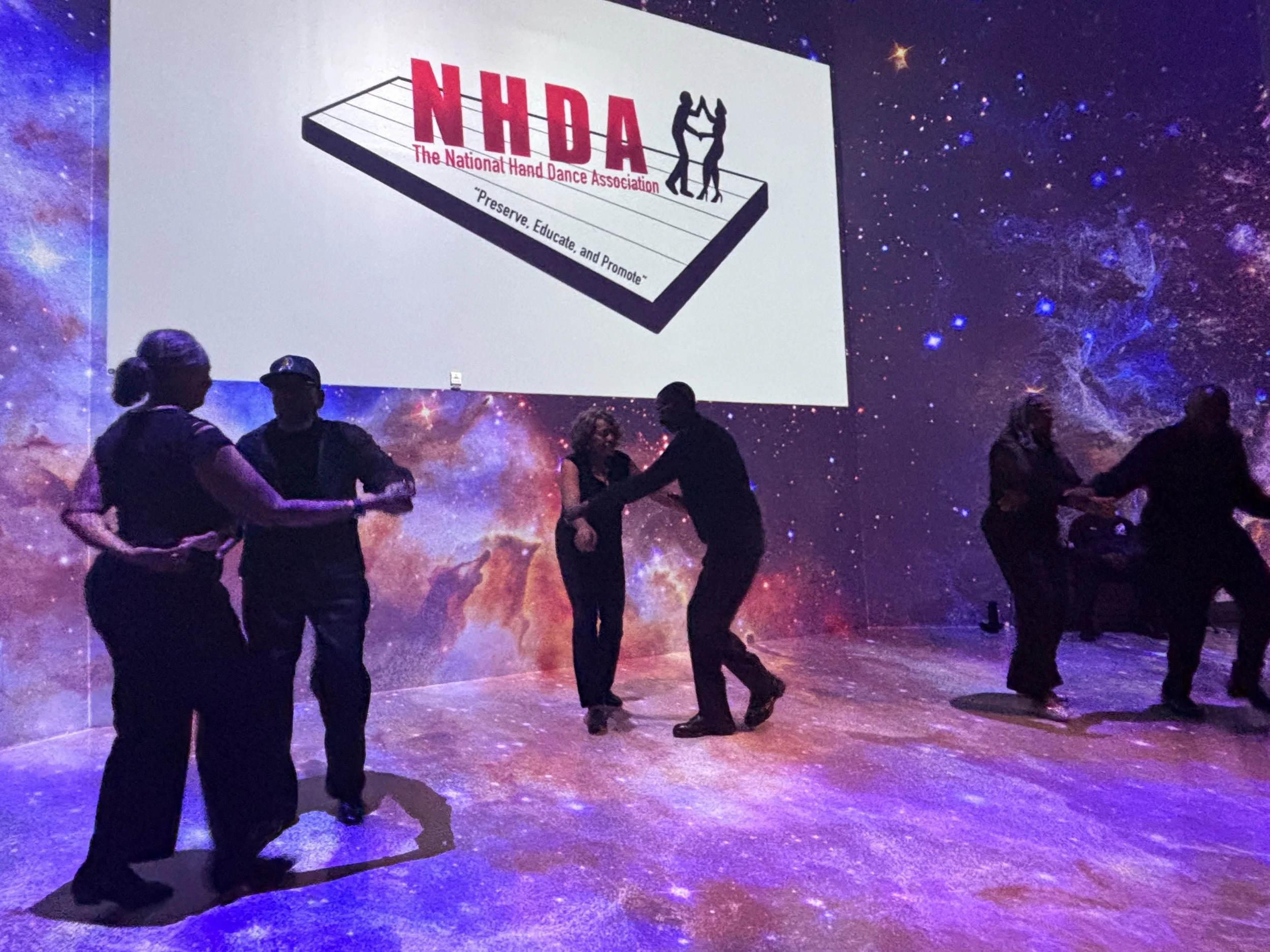
Ok this is actually two photos…Opening of the joint peer group session (left), and Hand Dancers in space! (right)
5 - Roll Call!
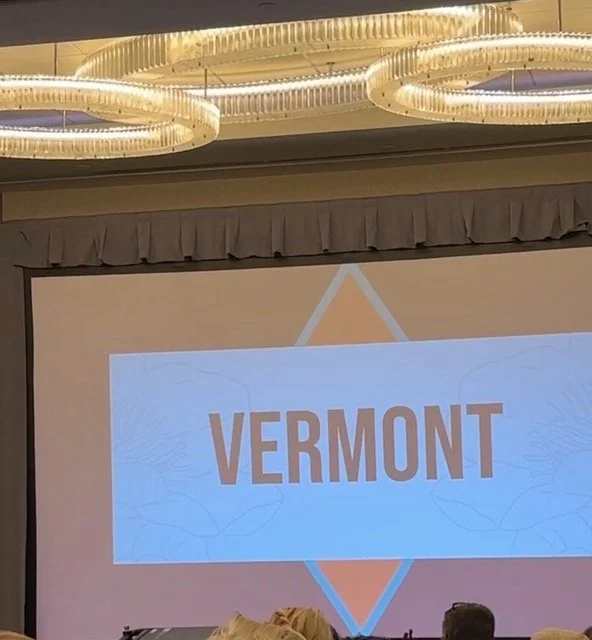
Vermont in the Roll Call
My time at NASAA concluded with the opening plenary of the Assembly itself, which included remarks from Mary Anne Carter, chairman of the National Endowment for the Arts. Even more exciting, though, was the national “roll call,” during which arts agency staff representing all 50 states and five U.S. territories took turns announcing their presence and celebrating something special about the places they call home. Idaho tossed bags of potato chips into the crowd; some delegations broke into song or recited clever poems; the delegation from Guam offered a proclamation in Chamorro. Vermont was proudly represented by our own Vermont Arts Council. Director Susan Evans McClure, shared an oft quoted sentiment from President Calvin Coolidge:
If the spirit of liberty should vanish in other parts of the union and support of our institutions should languish, it could all be replenished from the generous store held by the people of this brave little state of Vermont.
Amid the challenging reminders of the challenges that arts organizations nationwide are facing, this entire event left me feeling inspired and grateful to connect with people working hard to support and sustain the multiplicity of cultures and traditions that shape and reflect the places they call home. Vermont Folklife is proud to be among them.
~ Mary Wesley, October 2026