
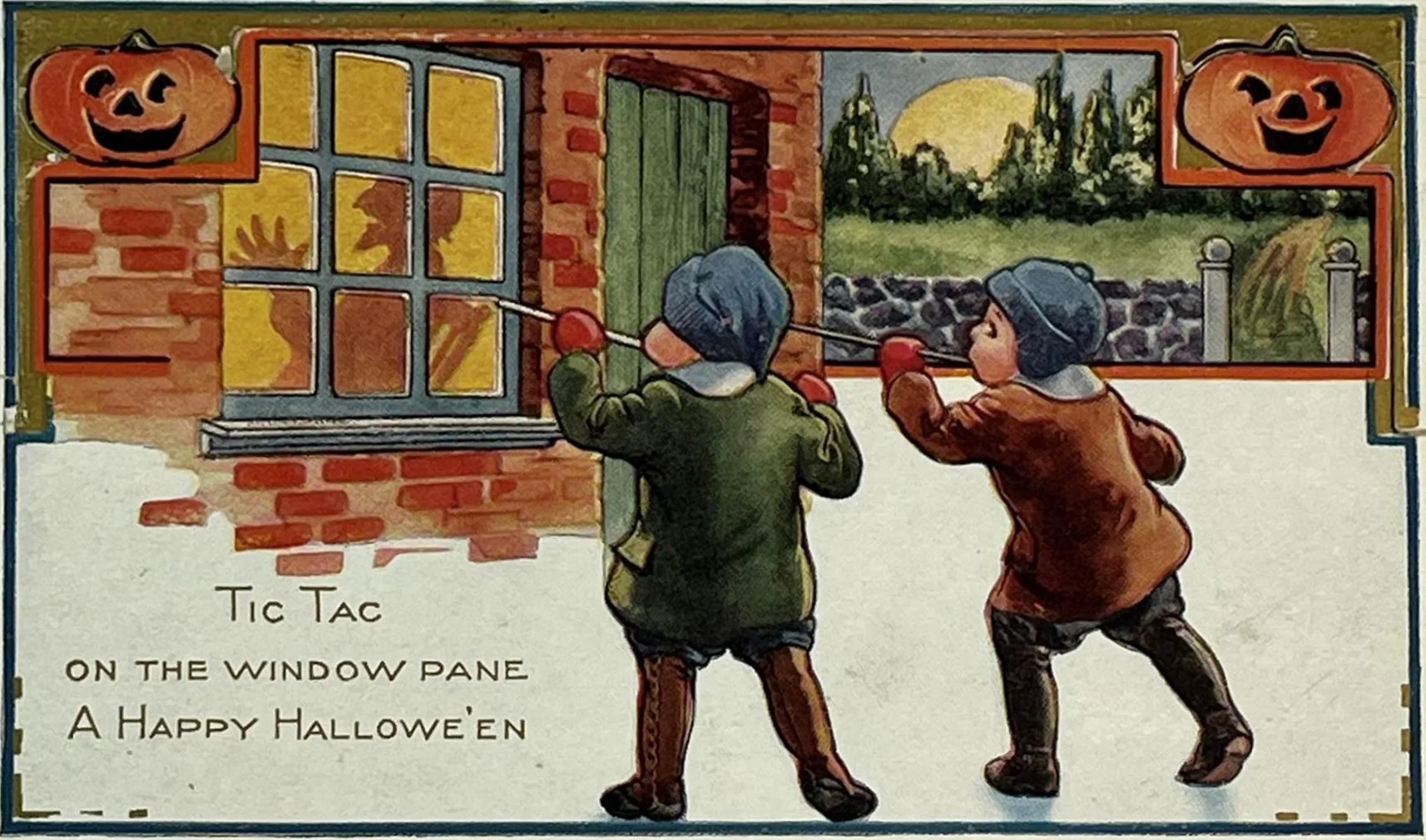
Halloween postcard, circa 1916.
Greetings, Fellow Fiends! It’s spooky season once more, and we’re back from the beyond to treat you to more Halloween tricks from the VT Folklife Archive…
This time last year our resident Unholy Archivist, Andy, abandoned his laboratory of Mad Archival Science and descended into our deepest archival crypts in search of more Untapped™ Halloween horrors for your ghoulish enjoyment.
Four days later—after we’d quite forgotten all about him, to be honest—he emerged, having exhumed quite a casket load of fascinating Halloween pranks undertaken by naughty Vermont youngsters in days of yore.
Among the pranks he dislodged from the brooding depths beneath VT Folklife HQ were several accounts of an unnamed mechanism—an implement of raw chaos—employed by miscreant youth to strike the starkest of terrors into the hearts of unwitting elders on All Hallows Eve.
What was this nameless mechanical nightmare, you ask? Fear not! We’ll get to that shortly, but first a brief detour across the Atlantic…
Window Tapping
The halloween pranks of the past described in the Vermont Folklife Archive range from the harmless to the annoying to the outright dangerous. “Annoying pranks” are those that were meant to startle and irritate without causing any actual damage to people or property.
In their 1959 book, the Lore and Language of School Children, British folklorists Iona and Peter Opie document a slew of annoying pranks played by children across the United Kingdom, including a category of them they refer to as “window tapping.” They also provide a solid list of the names used for window tapping activities, including “Thief Knock,” "Spirit Rapping,” “Cheekie Melly,” “Window Tacking” and “Tick Tack” among others.
Window tapping in general is pretty self-explanatory—generating a sound to frighten and/or aggravate someone by tapping on a window. Straightforward as it is, the methods of execution ranged from the simple to the pretty involved. On the simple side, a common approach to window tapping here in the US involved throwing dried corn kernels at windows to, pun intended, rattle the neighbors.
On the more complex—and dare we say mechanized—side, the Opies discuss a method of window tapping practiced in the UK that utilized an elaborate construction of black string, a button or small stone, and a tack or chewed gum. The perpetrator would tie a button or stone onto the string and affix the end of the string to the window sash with the tack or gum. Then, with the trailing end of the string in hand, they found cover, pulled the thread tight and let it loose so the button/stone bangs against the glass. Then they would repeat and repeat and repeat. The Opies note that “The trick appears to be particularly successful when played on superstitious spinsters and irascible old gentlemen” (389).
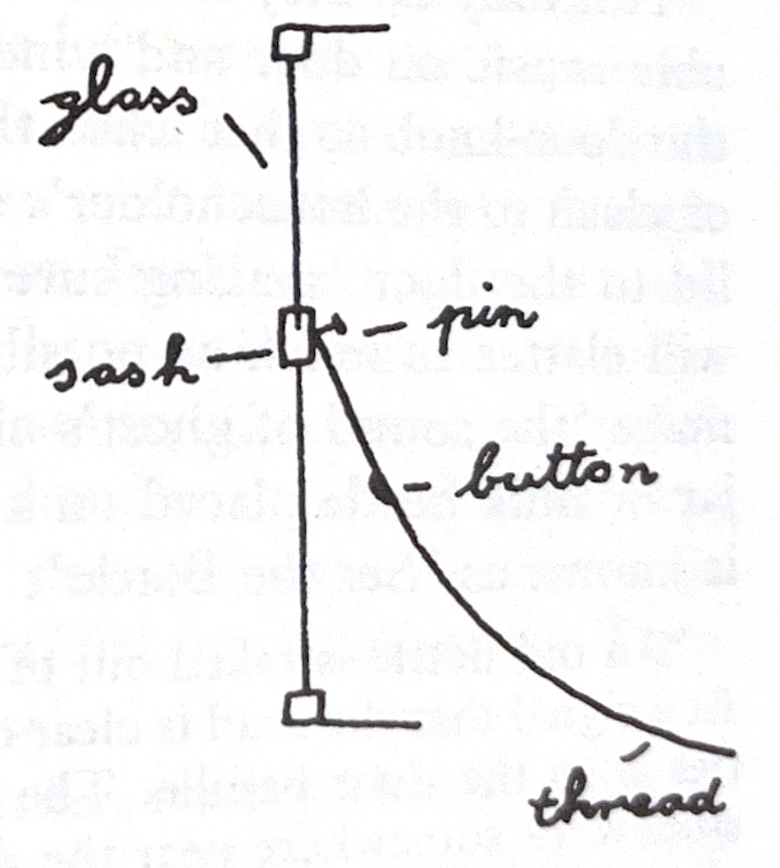
The Opies’ diagram of the British window tapping mechanism. Source: Opie, Iona and Peter. 1967 (1959). The Lore and Language of School Children. Oxford University Press. p. 389.
The Opies do not discuss window tapping as a Halloween-specific prank, but rather do so as a part of the broader repertoire of what they call “after-dark games” (377). Here in Vermont, pranks like window tapping were not just limited to Halloween either, but on Halloween kids were given a certain amount of freedom to get away with naughty antics, which made it a ripe opportunity for prank playing. And while British children in the mid-20th century had their window tapping mechanism, the kids here in Vermont–and across the US, in fact—had one of their own.
As described by Katharine Duclos of Braintree, VT in an interview recorded on June 20, 1990:
You take a spool and cut notches all around it, a thread spool. You put a spike through it and a string on it and pull on, wind it up and pull it, it would make an awful noise on a window. And you'd find somebody sitting in there, and then you'd do that.
The ingenuity of American youth, truly it is boundless.
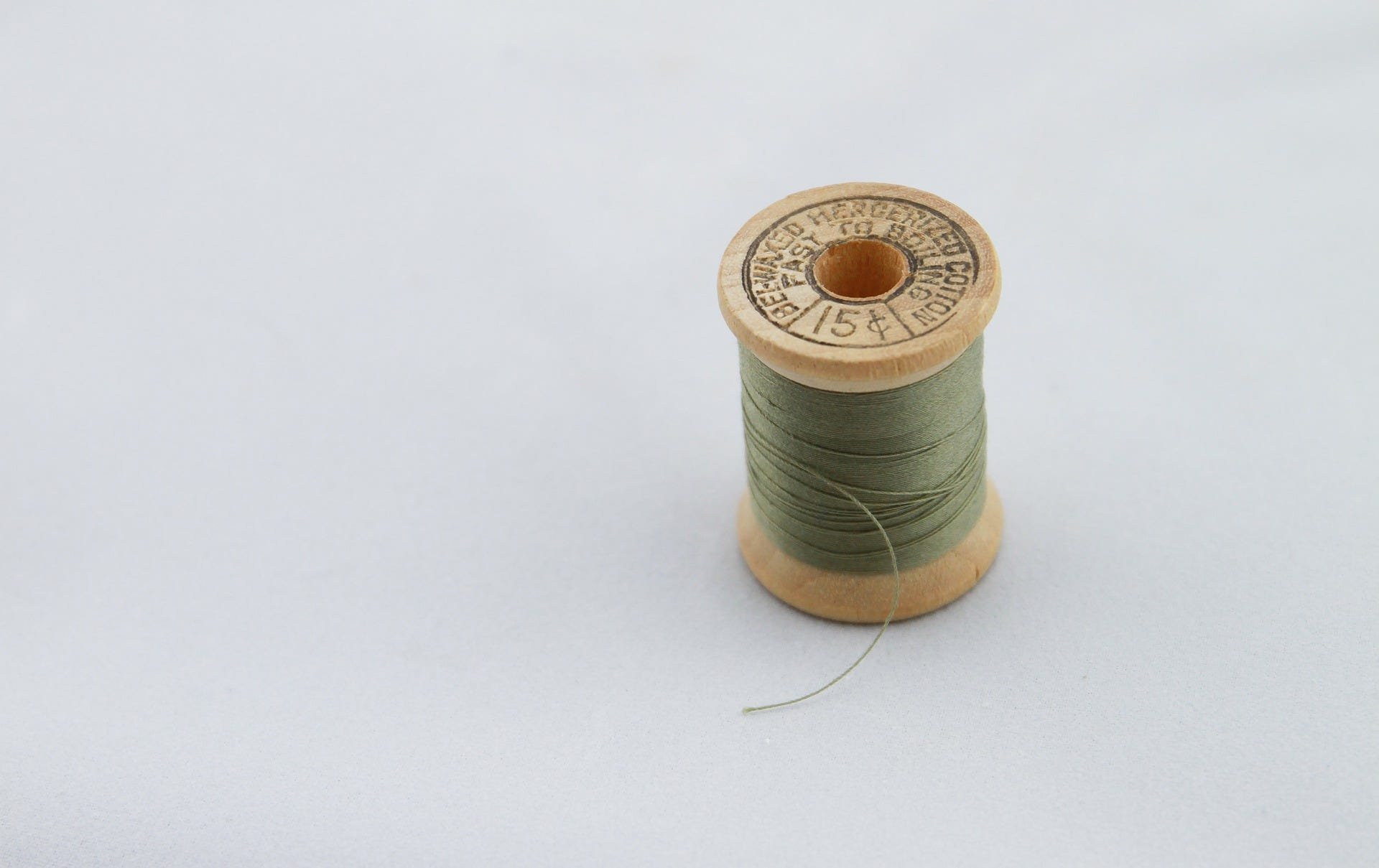
The humble wooden spool: twisted by the darkest of alchemies into a thing of nightmares. Source: pickpik.com.
Unwinding the Spool
We have a fair number of descriptions of this particular prank in the Vermont Folklife Archive, and, frustratingly, reviewing them only leads to more questions than answers. Most vexing is that not one of the interviewees who mention The Mechanism refer to it by a name. What the heck did they call it?
Furthermore, although the physical descriptions of The Mechanism are evocative…
You take a spool and cut notches all around it - Katharine Duclos, Braintree
…a large spool and you cut notches in it - Ed Dahlin, Newfane
So they got some spools and they cut some notches in them - Martha Sumner
we’d take a spool, a thread spool, and cut notches in it - Eriwin Fullerton, Woodstock
…they are also kind of vague. Sure, anyone who knows what a spool looks like could imagine notches placed around the raised ends–but what shape were they? How big? How many? I mean, at least the Opies gave us a crude diagram…
Finally what did they sound like? The descriptors used by interviewees include things like “an awful noise” and “what a noise”---but what made it awful?
Tick-Tacking
Our long suffering archivist pondered these seemingly unknowables for eons, futilely scouring the internet to no avail…until this June when, thanks to his stumbling upon the proper Search Engine Incantation he discovered this:
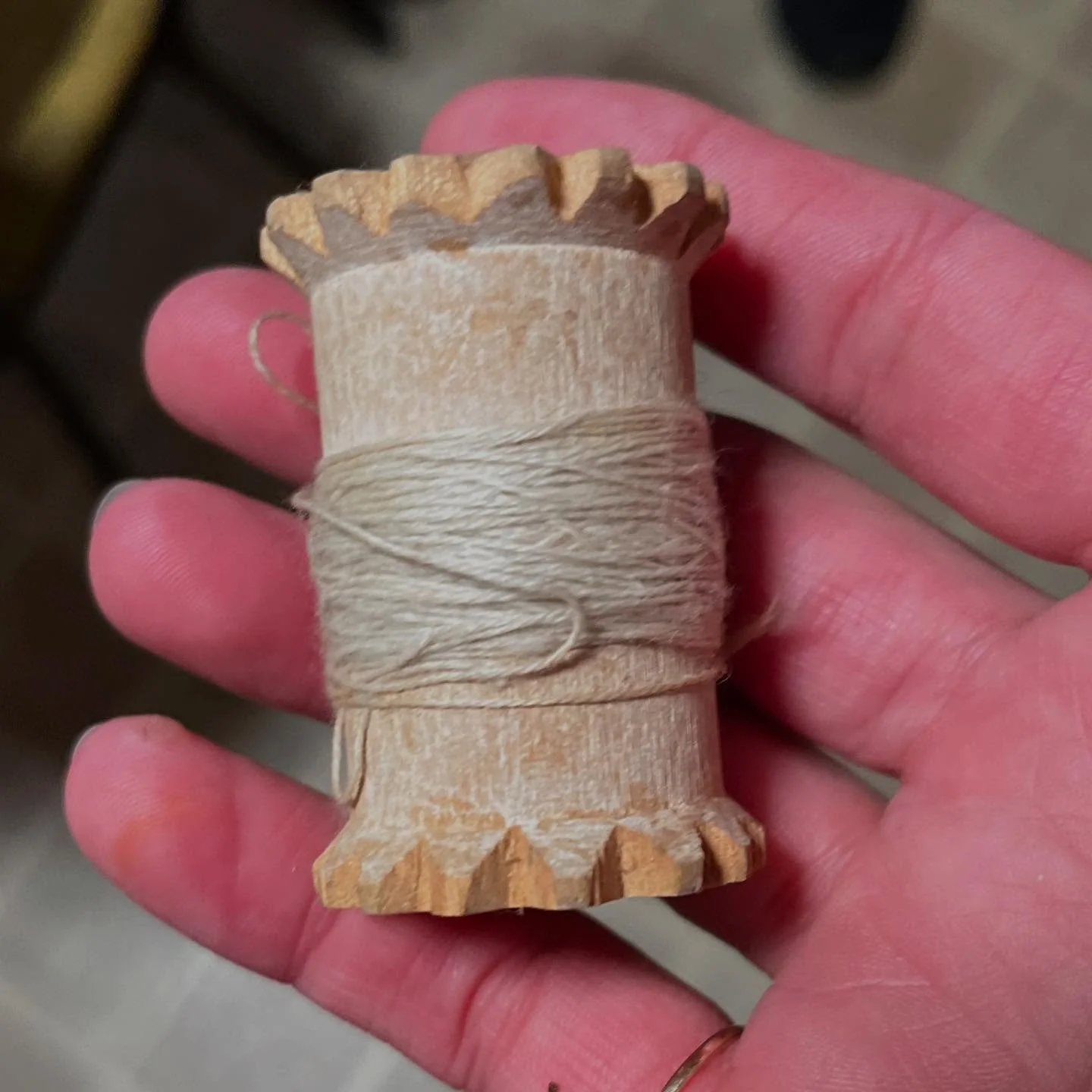
A “tic-tac” made by David Lindow. Photograph used with permission.
Andy reached out to the photographer, David Lindow, who explained that he’d learned about the device from a book he read as a boy, “I can’t remember which one it was, but it was part of the Sugar Creek Gang series.” Lindow noted that his grandmother, who came from Missouri, was familiar with The Mechanism and helped him make it. He also provided a name: “it was called a ‘tic-tac.’”
Beyond finally seeing one and now having a name for it (whether or not such a name was used here in Vermont), what made Andy even more excited was the discovery that the tic-tac device was known well beyond New England—at least as far west as Missouri, and likely well beyond. Also, if you think back to the start of this post, you might recall two of the names the Opies provided for window tapping in the UK: “Window Tacking” and “Tick Tack.” How cool is that?*
So with two mysteries solved, now one more remains: what in the world does a tic-tac sound like in action? Andy’s going to work on that for next Halloween.
Before signing off, we’ll leave you with one more tic-tacking story, this time from Ed Dahlin and Joe Molinski of Newfane, recorded by Jane Beck on August 19, 1992:
Ed Dahlin: We used to make those, spool--spool of thread, you know, a large spool and you cut notches in it, put it on a nail, and pull a string and put up against a window when somebody was sitting out and listen to the radio and pull that thing and oh.
Joe Molinski: Yeah what a noise!
Ed Dahlin: Then you'd run like heck. Ha! Ha!
Joe Molinski: Ha! Ha!
Happy Halloween! And tremendous thanks to David Lindow for sharing his photo and story with us!
*The Opies cite “Window Tacking” and “Tick Tack” as being found in a 1901 book by Francis Edward Taylor, Folk-Speech of South Lancashire. Andy could not find a copy, so he wasn’t able to provide more detail on the terms. Additionally, via the internet Andy learned that, here in the states, the act of throwing dried corn kernels at a window is also often called “tick tacking.”